
Effective Restaurant Software Solutions Every Owner Needs
Did you know that restaurant profit margins typically hover between just 3% and 9%? This staggering statistic highlights the urgent need for operators to adopt effective technology. In today’s fast-paced dining environment, the right management tools can significantly protect those slim margins.
As we move forward, restaurant owners face unprecedented challenges. Rising labor costs and the demand for seamless guest experiences are reshaping the industry. The most effective tools now integrate front-of-house and back-of-house operations. This means everything from reservations to point-of-sale transactions should work together smoothly.
This article serves as a comprehensive guide for restaurant owners evaluating technology investments. It will explore various platforms designed to streamline operations and enhance profitability. By the end, you’ll have a clearer understanding of how to choose the right tools to turn first-time diners into loyal customers.

Key Takeaways
- Understanding the importance of integrated technology for restaurant operations.
- Identifying essential tools that protect profit margins.
- Evaluating platforms based on their ability to streamline processes.
- Learning how to leverage guest data for better service.
- Exploring solutions suitable for both single-site and multi-location operations.
Understanding the Best Restaurant Software Solutions in 2026
In 2026, the landscape of restaurant management has transformed significantly. The term now refers to a vital operational layer that connects front-of-house service with back-office administration. This is not merely a single tool; it encompasses a range of functions that streamline operations.
Modern management platforms consolidate essential tasks such as scheduling, inventory control, supplier ordering, recipe costing, payroll processing, and performance reporting. This integration creates a unified data environment that eliminates the need for manual reconciliation.
It is crucial to distinguish true management systems from adjacent tools. Standalone POS terminals, accounting software, and marketing applications serve different purposes. These tools feed valuable data into the core management system, enhancing overall efficiency.
Restaurant operators must recognize that the value of any software investment lies in its ability to connect disparate functions. For example, reservations should flow seamlessly into guest profiles, while sales data can inform labor schedules. Additionally, inventory depletion can trigger automatic reorders, ensuring that operations run smoothly.
The market is bifurcating into two main categories. Comprehensive operating systems, like Nory, utilize AI to autonomously manage multiple operational areas. In contrast, specialized point solutions excel in specific functions but require integration with other tools.
This distinction is especially important for multi-site restaurant groups. The choice between an all-in-one platform and a collection of best-of-breed specialists can impact data accuracy, staff training time, and long-term scalability.
Understanding these differences prepares owners to evaluate the solutions profiled in the following sections. By focusing on their specific operational gaps and growth goals, they can make informed decisions that enhance their business.

Core Categories of Restaurant Software Solutions
Today’s restaurant management requires a diverse array of software tools to optimize performance. These tools not only streamline operations but also enhance the overall guest experience. Understanding the core categories is essential for operators aiming to protect their margins and improve service.
Reservation and Table Management Software
Reservation software actively fills slow shifts and surfaces demand patterns. It maximizes seating efficiency without overcrowding the dining room. Table management tools track availability in real time, handling seating assignments to keep guest flow moving smoothly.
Point of Sale (POS) Systems
Modern POS systems serve as the operational nerve center during service. They process payments securely while syncing orders with kitchen display systems. This integration ensures that the line keeps moving during peak rushes, significantly enhancing the guest experience.
Inventory Management Tools
Inventory management tools provide real-time visibility into stock levels. They flag alerts before stockouts and build predictive insights that tighten food cost control over time. This proactive approach helps operators maintain consistent service without interruptions.
Employee Scheduling and Labor Management
Employee scheduling tools streamline shift creation and track attendance. They adjust labor costs in real time, allowing managers to avoid budget overages. This flexibility is crucial for maintaining a balanced team during busy periods.
Customer Relationship Management (CRM) and Marketing Automation
CRM and marketing automation software consolidate guest details into usable databases. This data powers targeted campaigns and loyalty programs, driving repeat visits. By understanding customer preferences, operators can tailor their offerings effectively.
Payment Processing Solutions
Payment processing solutions must work near-instantaneously across various channels. They provide strong security and compliance for every transaction, ensuring a smooth checkout experience for guests.
Kitchen Display and Order Management Systems
Kitchen display systems replace paper tickets with user-friendly screens. These systems update in real time as items are fired, bumped, or modified, eliminating bottlenecks and ensuring accurate order fulfillment.
AI-Powered Restaurant Operating Systems
AI-powered operating systems, like Nory, represent the newest category in restaurant technology. They autonomously run forecasting, scheduling, ordering, and payroll, optimizing profitability across multi-site groups. This advanced integration minimizes manual intervention, allowing operators to focus on growth.
Understanding these categories helps operators identify gaps in their current stack. By prioritizing investments in these areas, they can significantly enhance both their margins and guest satisfaction.

SevenRooms: The Front-of-House Reservation and Guest Data Powerhouse
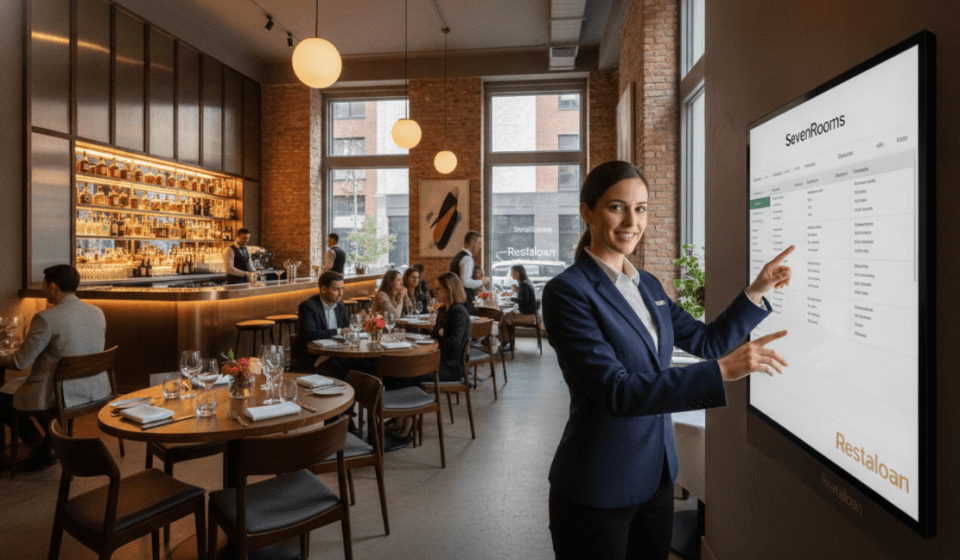
The evolution of technology has dramatically reshaped how restaurants manage their guest interactions. SevenRooms stands out as a premier platform designed for multi-location restaurant groups, hotel F&B teams, and independent operators. This tool empowers businesses to drive repeat visits, strengthen guest relationships, and ultimately grow revenue.
SevenRooms unifies key functions such as reservations, waitlist management, table assignments, payments, and POS integration into a single, cohesive system. This integration builds comprehensive guest profiles that span every visit, location, and ordering channel. By owning their guest data, operators can segment audiences, trigger personalized campaigns, and measure lifetime value without external interference.
One of the platform’s strongest features is its lack of per-cover fees, a significant advantage over legacy reservation platforms that often treat guest data as proprietary assets. This ensures that operators maintain full control over their guest relationships.
Moreover, the strategic partnership with DoorDash enhances the platform’s flexibility. Operators can prioritize first-party growth through owned reservation channels while still tapping into DoorDash’s consumer marketplace during slower periods. This hybrid model allows for seamless integration of online ordering, feeding directly into guest profiles without the need for additional staff training or manual data syncing.
Real-world results showcase the platform’s impact. For instance, Al Aseel, a ten-venue Lebanese restaurant group in Sydney, expanded from six to ten locations within just eight months of adopting SevenRooms. Their revenue surged by 116% the following year, with prepayment revenue increasing by an impressive 166% year-over-year.
For multi-location groups looking to consolidate guest data, eliminate per-cover fees, and build direct relationships that drive repeat visits, SevenRooms represents the category standard. Its powerful features and seamless integration make it an invaluable tool for modern operators.
Toast: The All-in-One POS and Operations Platform for Restaurants
Toast has emerged as a pivotal platform designed specifically for the unique needs of dining establishments. This POS-integrated platform combines essential functions like tableside ordering, payroll, scheduling, and inventory tracking into a single stack.
Independent operators and growing groups benefit greatly from Toast. It allows them to consolidate both front-of-house and back-of-house functions without the hassle of managing multiple vendor relationships. This integration simplifies operations and enhances overall efficiency.
Where Toast truly shines is in its depth of POS-native integrations. Operators can seamlessly connect kitchen display systems, online ordering channels, and labor management tools without the significant custom configuration often required by generic POS solutions.
The hardware is designed with restaurants in mind. Toast offers IP54 spill-proof terminals that withstand the heat, grease, and chaos of busy environments. This durability reduces downtime and replacement costs, making it a smart investment for any establishment.
Pricing is structured to accommodate various business stages. It starts with a free Starter Kit for new concepts, moving to the POS at $69 per month and the Essentials plan at $165 per month. For larger multi-location groups, custom pricing options are available.
Additionally, for operators who may outgrow Toast’s native capabilities, the platform integrates with advanced operating systems like Nory. This integration allows for AI-powered forecasting and autonomous scheduling without the need for a full POS migration.
For independent restaurateurs and expanding groups evaluating their options, Toast delivers a low-friction path to a consolidated, restaurant-specific technology stack. Its comprehensive features and robust integrations make it an essential tool for modern operators.
Restaurant365: Advanced Accounting and Inventory Management at Scale
Managing a restaurant’s finances can be complex, especially for multi-unit operators. Restaurant365 is an accounting-focused platform designed to meet these challenges head-on. It provides centralized control over food costs, labor planning, and financial reporting.
This platform connects directly with restaurant POS systems. This integration eliminates the need for manual data entry, pulling sales and labor data automatically into accounting and inventory workflows. For regional leaders and finance teams overseeing multiple locations, this feature is invaluable.
Restaurant365 reduces the reporting lag that often hides margin problems. This is crucial for operators who need to act quickly to address issues before they escalate. Its inventory management capabilities offer real-time visibility into stock levels across locations.
Automated reorder triggers prevent stockouts during peak service periods. This ensures that restaurants can maintain service quality without interruptions. Additionally, Restaurant365’s deep accounting integration sets it apart from other tools that treat financial reporting as an afterthought.
It is particularly suited for US-based operators, with features tailored to local tax codes and compliance regulations. However, operators in the UK and EU should be aware of limited HMRC and tronc support before evaluating this platform.
For growing chains that have outgrown spreadsheet-based accounting, Restaurant365 provides the necessary infrastructure to scale. This platform allows operators to maintain visibility into the numbers that determine profitability, making it a strong choice for multi-site operators.
DoorDash: Delivery and Ordering Platform Integration for Expanding Revenue
As the dining landscape evolves, operators are increasingly turning to innovative platforms to enhance their revenue streams. DoorDash offers a dual-channel approach that allows restaurant operators to expand their reach and optimize profits.
The Delivery Marketplace connects restaurants with DoorDash’s vast consumer base. This feature drives incremental orders from new guests who discover brands through the app’s discovery features. Meanwhile, the Commerce Platform enables commission-free first-party ordering directly from a restaurant’s website. This allows operators to capture higher margins while retaining full ownership of guest data.
Both channels synchronize seamlessly with existing POS systems. This integration maintains menu accuracy, pricing consistency, and streamlined order flow without requiring staff to manually update items across multiple tablets. The result is a more efficient operation that enhances service and customer satisfaction.
When paired with SevenRooms, the strategic value of DoorDash multiplies. This partnership creates a unified data environment where delivery orders, reservation history, and guest profiles merge. Operators gain a comprehensive view of customer behavior across every channel, empowering personalized marketing and loyalty initiatives.
By eliminating data silos, DoorDash helps operators understand their guests better, regardless of how they engage with the brand. For restaurant owners evaluating technology options, DoorDash’s platform represents a mature choice for capturing off-premise revenue while maintaining vital guest relationships.
Square POS and Other Contract-Free Solutions for Smaller Operations
For many smaller operations, choosing the right POS system can be a game-changer. Square POS stands out as a leading contract-free option for operators seeking a reliable system without long-term commitments. This platform covers essential functions like payments, basic inventory, and reporting at a price point accessible to early-stage concepts and lower-volume independents.
Square’s sales software is free to use, with no setup or monthly fees. Operators only pay payment processing fees of 2.6% + 10 cents for each transaction. This model aligns costs directly with sales volume, eliminating fixed overhead for fledgling businesses.
The platform offers:
- Flexible hardware options: From simple card readers to full register setups, allowing operators to start lean and add equipment as revenue grows.
- Essential operational functions: Including payment acceptance across chip cards, Apple Pay, Google Pay, and Cash App Pay.
- Basic inventory tracking: This provides visibility into daily performance without overwhelming complexity.
- Add-on marketplace: Operators can layer on features like email marketing, loyalty tracking, team management, and payroll processing as their business grows.
- Rapid setup: Typically under a week with minimal configuration, making it ideal for new operators needing to accept payments quickly.
However, single-site operators should recognize that Square’s generalist design lacks some restaurant-specific workflows. Dedicated platforms like Toast or Lightspeed offer spill-proof hardware and deeper inventory management. Thus, Square serves as a stepping stone rather than a permanent solution for concepts with serious growth ambitions.
Restroworks: Enterprise-Grade Cloud Kitchen and Multi-Location Management
For operators managing multiple locations, a robust management platform is essential. Restroworks is designed specifically for cloud kitchens and multi-location chains. It offers centralized menu management, real-time inventory control, and integrated kitchen display systems across every unit.
This platform is perfect for operators handling high order volumes across various formats. Whether it’s QSR chains, ghost kitchen networks, or hybrid dine-in and delivery concepts, Restroworks has the tools to manage operations effectively.
Centralized control is vital for large groups. It ensures menu consistency and inventory accuracy across locations, which are non-negotiable aspects of successful operations. Restroworks provides the infrastructure needed to manage these complexities without relying on manual processes at each location.
- Menu Management: The platform centralizes menu updates, allowing price changes and item additions to propagate instantly to every location.
- Real-Time Inventory Control: Operators gain visibility into stock levels across all units. Automated alerts prevent stockouts and minimize waste from over-ordering.
- Integrated Kitchen Display Systems: Orders flow seamlessly from POS terminals to prep stations, ensuring efficient service regardless of order origin.
- Order Routing: Restroworks is built for cloud kitchens, managing multiple virtual brands from a single facility. This prevents cross-contamination and maintains each concept’s standards.
- Scalability: The platform supports QSR chains and hybrid concepts, allowing them to scale without manual bottlenecks that lead to errors.
Multi-location operators evaluating their options will find that Restroworks delivers the centralized control and consistency required for enterprise groups. It maintains the flexibility needed for individual locations to respond to local market conditions.
Lightspeed: POS-Integrated Analytics and Inventory Insights
Lightspeed stands out as a dynamic platform, offering robust analytics and real-time inventory management for today’s dining establishments. This POS-integrated platform is tailored for independent restaurants and small groups that seek deeper analytical insights than basic systems provide.
With its strong analytics layer, Lightspeed helps operators gain a clearer picture of sales trends, food costs, and waste management. The real-time inventory tracking connects purchasing decisions directly to menu performance data. This visibility allows operators to identify which ingredients drive profit and which contribute to waste.
Key features of Lightspeed include:
- Order Anywhere: This feature enables contactless tableside payments through QR code scanning, enhancing service speed and guest satisfaction.
- Bill Splitting: Powered by Lightspeed Payments, this function allows for easy division of checks, catering to customer preferences.
- Lightspeed Delivery: This integration streamlines orders from DoorDash and UberEats directly into the POS, reducing order entry errors.
- Kitchen Display System: Replacing paper tickets, this system updates in real time, ensuring efficient communication between the front and back of the house.
- Menu Engineering Tools: These tools analyze sales velocity and item popularity, guiding strategic decisions about pricing and menu design.
Pricing for Lightspeed starts at $69 per month, scaling up to $400 for advanced features. Its integration with Nory’s operating system offers a pathway for operators who may need more advanced capabilities in the future.
For independent operators and small groups who want more analytical firepower than entry-level POS systems provide, Lightspeed hits the sweet spot. This platform equips operators with the tools necessary to enhance their operations and ultimately drive profitability.
7Shifts: AI-Driven Staff Scheduling and Labor Cost Optimization
For restaurant owners, optimizing staff schedules is a key strategy to enhance operational performance. 7Shifts is a team management platform built specifically for restaurants. It offers AI-powered schedule automation, real-time sales versus labor tracking, and automated tip pool calculations.
This platform serves as a strong standalone tool for operators who need more discipline in labor cost management without overhauling their entire stack. General Managers (GMs) managing hourly teams across multiple shifts benefit significantly from 7Shifts. It reduces the administrative load of scheduling while providing leadership with clearer visibility into whether labor spend is tracking against revenue.
7Shifts excels in addressing one of the most persistent profit-draining challenges in restaurant operations: the gap between scheduled labor hours and the revenue those hours actually support. The platform’s AI-powered scheduling engine analyzes historical sales patterns, upcoming reservations, weather forecasts, and local events. This data helps generate optimized shift plans that align staffing levels with predicted demand.
Real-time sales versus labor tracking gives GMs a live dashboard showing whether current labor spend is tracking against revenue targets. This feature enables mid-shift adjustments that prevent budget overages from compounding across the pay period. Additionally, automated tip pool calculations eliminate the manual reconciliation that consumes hours of manager time each week.
For GMs managing hourly teams across multiple dayparts and shift patterns, 7Shifts reduces the administrative burden of schedule creation, shift swaps, and time-off requests. What used to be a multi-hour weekly ordeal is now a streamlined digital workflow.
The platform integrates seamlessly with major POS systems to pull actual sales data into labor reports. This ensures that scheduling decisions are grounded in real performance metrics rather than gut feelings. Single-site operators and small chains with up to 50 locations will find that 7Shifts delivers immediate labor cost discipline without requiring the infrastructure overhaul of a full operating system migration.
For restaurants where labor costs have crept beyond target percentages, 7Shifts provides the focused solution that addresses the root cause without disrupting other operational systems. It’s a powerful tool for any restaurant aiming to gain control over their scheduling and labor management.
Nory: The Future of Autonomous Restaurant Operating Systems
In an era where efficiency is key, Nory offers a groundbreaking approach to restaurant operations. This agentic AI system goes beyond traditional management tools by autonomously running core functions such as forecasting, scheduling, and ordering. Unlike other platforms that merely report data, Nory actively optimizes operations to enhance profitability.
Nory’s crew of AI Assistants manages critical areas like invoicing, payroll, and compliance, ensuring that every aspect of the business aligns with prime-cost targets. This innovative platform pulls data from various sources, creating a live system that helps operators understand operational dynamics and make informed decisions.
Results from Nory’s implementation are impressive. Customers report a 10-20% reduction in labor costs within the first eight weeks. Additionally, the platform boasts a 97% accuracy rate in demand forecasting and a significant reduction in food waste by approximately 50%.
For multi-site operators, Nory is particularly beneficial. It integrates seamlessly with popular POS systems like Toast and Lightspeed, allowing businesses to maintain their existing infrastructure while enhancing operational control. This integration means that operators can focus on strategy and guest experience, knowing that their software is handling the day-to-day management tasks autonomously.
Real-world examples validate Nory’s effectiveness. For instance, Digbeth Dining Club achieved near-perfect labor accuracy, staying within 0.38% of their planned labor costs while maintaining gross profits of 70-71%. This level of precision illustrates how Nory empowers operators to manage complex multi-venue environments effortlessly.
In summary, Nory represents a fundamental shift in restaurant technology. By moving from traditional reporting systems to an autonomous operating platform, it provides a solution that allows operators to run their businesses more efficiently and profitably.
How to Choose the Right Restaurant Software Solution
Choosing the right technology can be a pivotal decision for restaurant operators. The landscape of management tools is vast, and selecting the best fit can streamline operations and enhance profitability. To simplify this process, operators should focus on three foundational questions.
Assessing Your Business Size: Single-Site vs. Multi-Site Needs
The first question is about business size. Are you operating a single site or multiple locations? This distinction is crucial. Single-site operators often benefit from POS-led suites like Toast or Square. These systems consolidate ordering, payments, and basic reporting into a low-friction package.
In contrast, multi-site groups require platforms like Restaurant365 or Nory. These solutions provide cross-location visibility, consolidated financial reporting, and centralized control over inventory and labor. As the number of locations increases, so does the complexity of operations.
Specialist Tools vs. All-in-One Operating Systems
The second question revolves around the scope of tools. Are your challenges concentrated in one area, or are they spread across multiple functions? If your biggest pain point is a specific operational area, a specialist tool like 7Shifts can effectively address labor management without disrupting other systems.
However, if your challenges stem from gaps between disconnected systems, an all-in-one operating system like Nory can eliminate integration issues. This approach helps streamline operations and reduce manual reconciliation work.
Reporting-Only Platforms vs. Decision-Making and Automation Software
The third question addresses the level of automation needed. Do you require software that simply surfaces data for analysis, or do you need a system that autonomously acts on that data? Operators with the time and expertise to analyze reports may find robust analytics platforms sufficient.
On the other hand, if your margins are shrinking due to a lack of actionable insights, consider AI-powered systems that execute operational decisions automatically. This three-question framework transforms software selection into a strategic decision that aligns technology investment with specific operational gaps.
Key Features to Prioritize When Evaluating Software Solutions
The right features in restaurant management tools can significantly impact operational efficiency. When assessing various options, operators should focus on four key aspects that determine the return on investment (ROI) of their software choices.
Integration and Unified Data Flow
Integration and unified data flow stand as the single most important feature to evaluate. Disconnected systems create blind spots that can lead to food waste, labor overages, and missed revenue opportunities. When reservation platforms, POS systems, inventory tools, and marketing automation operate in silos, operators make decisions based on incomplete data.
For instance, if a POS doesn’t communicate actual sales, operators might order too much produce. Similarly, overstaffing can occur if scheduling tools lack updated booking forecasts. Platforms like SevenRooms and Toast offer deep, native connections that close the loop between guest orders and marketing campaigns, making integration a vital consideration.
User Experience and Ease of Staff Training
User experience directly impacts whether a software investment gets adopted on the floor. In an industry with high turnover, intuitive interfaces and mobile accessibility are crucial. Minimal training requirements help new team members learn systems quickly.
Platforms that empower staff through ease of use foster better service. On the other hand, systems that create friction during service can hinder operational efficiency.
Cost Structure and Pricing Transparency
Cost structure and pricing transparency demand careful scrutiny. Restaurant margins cannot absorb surprise fees or unpredictable per-cover charges. Operators should seek clear answers about payment processing rates, monthly subscription fees, and any hidden costs before committing to a platform.
Understanding the total cost of ownership helps ensure that investments align with financial goals.
Scalability and Flexibility for Future Growth
Scalability ensures that today’s software investment doesn’t become tomorrow’s migration headache. Single-site operators should evaluate whether a platform can support multiple locations and additional revenue channels.
Advanced features like AI-powered automation should be considered for future growth. The best restaurant management tools demonstrate clear ROI across all four evaluation dimensions, making them invaluable for operators aiming to enhance their operations.
Maximizing ROI with the Best Restaurant Software Solutions in 2026
Maximizing returns on investments in technology is crucial for modern dining establishments. The right management platform connects front-of-house, back-of-house, and administrative functions. This integration ensures operators never make decisions with stale or incomplete data.
When data flows between systems in real time, operators can act on staffing, purchasing, and guest trends without waiting for end-of-week reports. The strongest technology stacks combine at least two of the three core strengths:
- Accounting-focused platforms that centralize financial and food cost control.
- POS-integrated systems that unify ordering, payments, and operations.
- Team management tools that optimize labor and scheduling.
Every revenue stream should flow through an integrated platform so guest data follows each transaction. You’re paying third-party platforms to access your own guests—that’s not a staffing problem, it’s a software problem.
To maximize ROI from technology investments, operators must shift their perspective. Instead of viewing technology as a necessary expense, they should see it as the operational infrastructure that protects margins and drives revenue growth.
Here are some actionable strategies:
- Combine at least two core platform categories: an accounting-focused system like Restaurant365, a POS-integrated platform like Toast, and a team management tool like 7Shifts.
- Ensure integration is a priority. When every revenue stream flows through connected systems, guest data becomes unified, powering personalized marketing and loyalty programs.
- Avoid underutilizing purchased features. Teams should activate all capabilities of their platforms, such as automated waitlist management and CRM-triggered marketing campaigns.
- Focus on staff training. Platforms with intuitive interfaces and mobile accessibility lead to faster adoption and fewer errors during peak service periods.
- Measure ROI against specific metrics. Track labor cost percentage, food cost variance, table turn time, and repeat guest rates for clearer insights.
The best restaurant software solutions in 2026 deliver measurable, line-item impacts on the P&L statement. When implemented with intentional integration, thorough training, and disciplined performance tracking, these tools can significantly enhance profitability.
Conclusion
Understanding the right technology for your operation can greatly influence your success. The landscape of restaurant management offers more integrated and intelligent solutions than ever before. However, the abundance of options makes strategic selection essential.
Operators should evaluate their current systems against the frameworks outlined in this guide. Focus on your business size, specific pain points, and growth goals. This three-question decision framework will help you match technology investments to your operational needs.
As the industry continues its shift toward AI-powered operations, choosing platforms that can evolve is vital. Embrace the tools that will not only enhance efficiency but also drive profitability in a competitive market.
FAQ
What features should I look for in a POS system?
Key features to consider include user-friendly interfaces, integration capabilities with other tools, inventory tracking, and reporting functionalities. These elements enhance operational efficiency and improve service quality.
How can inventory management tools help my business?
Inventory management tools streamline tracking, reduce waste, and ensure that you have the right stock levels. They provide insights into sales trends, helping you make informed purchasing decisions.
What is the benefit of using employee scheduling software?
Scheduling software simplifies labor management by allowing you to easily create and adjust staff schedules. This helps optimize labor costs and ensures adequate coverage during peak hours.
How do CRM systems enhance customer relationships?
CRM systems collect and analyze customer data, enabling personalized marketing efforts and improved service. This fosters loyalty and encourages repeat business.
What are the advantages of using an all-in-one platform?
An all-in-one platform integrates various functions like POS, inventory, and payroll into a single system. This reduces the need for multiple software solutions, streamlining operations and minimizing errors.
How does payment processing integration work?
Payment processing integration allows your POS system to directly handle transactions, making the payment process seamless for customers. It also provides real-time sales data and reduces manual entry errors.
Why is data analytics important for restaurant operations?
Data analytics provides insights into sales patterns, customer preferences, and operational efficiency. This information helps owners make data-driven decisions to enhance profitability and improve service.
What should I consider when evaluating costs for software solutions?
When evaluating costs, consider not only the upfront fees but also ongoing expenses such as subscription costs, transaction fees, and potential costs for training and support.
How can I ensure my team is trained effectively on new software?
Effective training can be achieved through hands-on workshops, video tutorials, and ongoing support. Ensuring that staff are comfortable with the system is crucial for maximizing its benefits.
What role does kitchen display technology play in operations?
Kitchen display technology streamlines order management by displaying orders in real-time, reducing errors and improving communication between front-of-house and kitchen staff.